Top 10 Allama Iqbal Famous Poetry in Urdu – علامہ اقبال شاعری
Allama Muhammad Iqbal is one of the most celebrated Urdu poets, philosophers, and thinkers. His poetry inspires readers to develop self-confidence, pursue knowledge, work hard, and rise above limitations. Often remembered as the Poet of the East, Iqbal wrote powerful poetry about Khudi, youth, faith, courage, freedom, and spiritual awakening. His major Urdu collections include Bang-e-Dara, Bal-e-Jibril, Zarb-e-Kalim, and Armaghan-e-Hijaz. Allama Iqbal’s poetry collections
1. Khudi Ko Kar Buland Itna
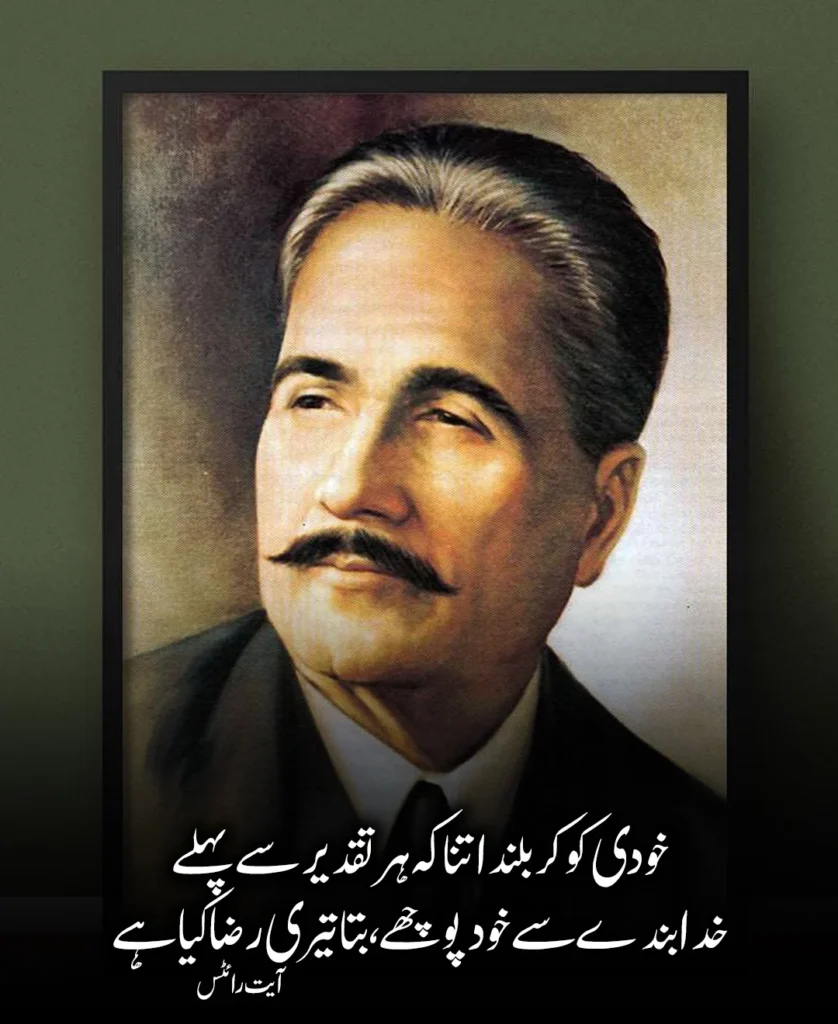
خودی کو کر بلند اتنا کہ ہر تقدیر سے پہلے
خدا بندے سے خود پوچھے، بتا تیری رضا کیا ہے
Khudi ko kar buland itna ke har taqdeer se pehle,
Khuda bande se khud poochhe, bata teri raza kya hai.
This famous Allama Iqbal poetry encourages people to strengthen their character, confidence, and spiritual identity. Iqbal teaches that individuals should work so hard and develop such strong principles that they become active makers of their destiny. Read the verified couplet
2. Sitaron Se Aage Jahan Aur Bhi Hain
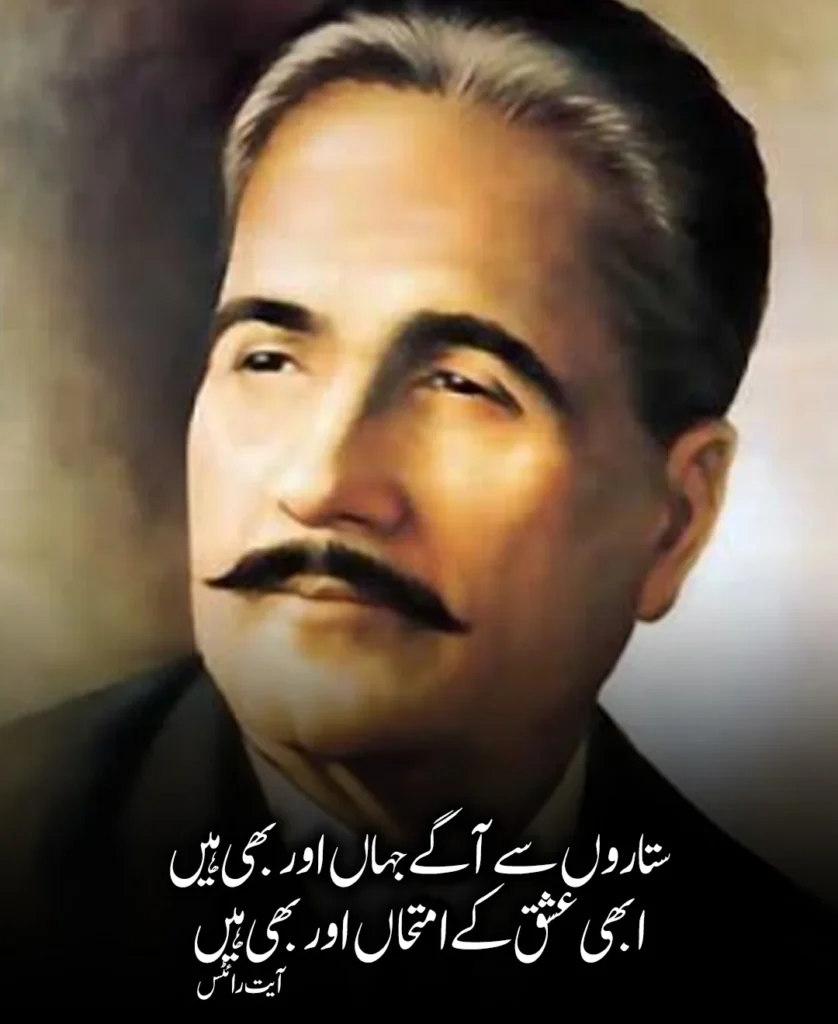
ستاروں سے آگے جہاں اور بھی ہیں
ابھی عشق کے امتحاں اور بھی ہیں
Sitaron se aage jahan aur bhi hain,
Abhi ishq ke imtihan aur bhi hain.
These lines motivate readers to continue moving forward after achieving success. There are always new opportunities, greater goals, and more difficult challenges waiting beyond the present destination.
3. Tu Shaheen Hai, Parwaz Hai Kaam Tera
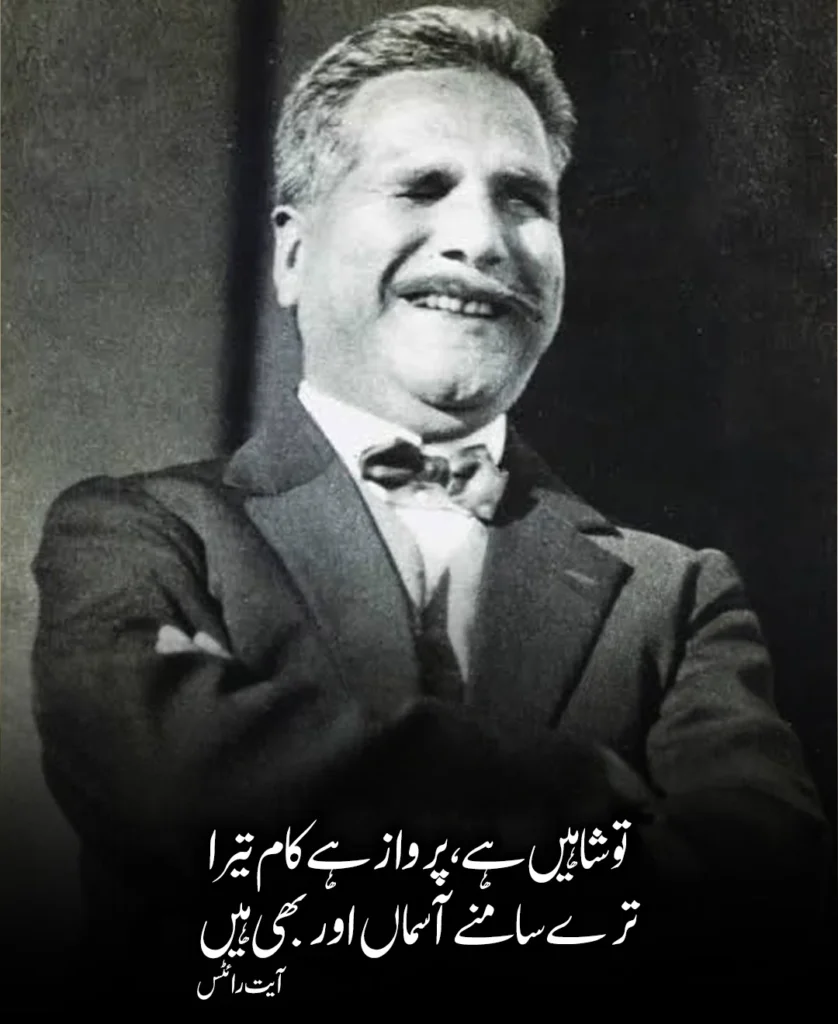
تو شاہیں ہے، پرواز ہے کام تیرا
ترے سامنے آسماں اور بھی ہیں
Tu shaheen hai, parwaz hai kaam tera,
Tere samne aasman aur bhi hain.
Iqbal uses the Shaheen, or eagle, as a symbol of courage, freedom, ambition, and high thinking. He reminds young people that they possess the ability to rise above difficulties and reach new heights. This verse appears in the celebrated poem beginning “Sitaron Se Aage,” published in Bal-e-Jibril.
4. Nahin Tera Nasheman Qasr-e-Sultani
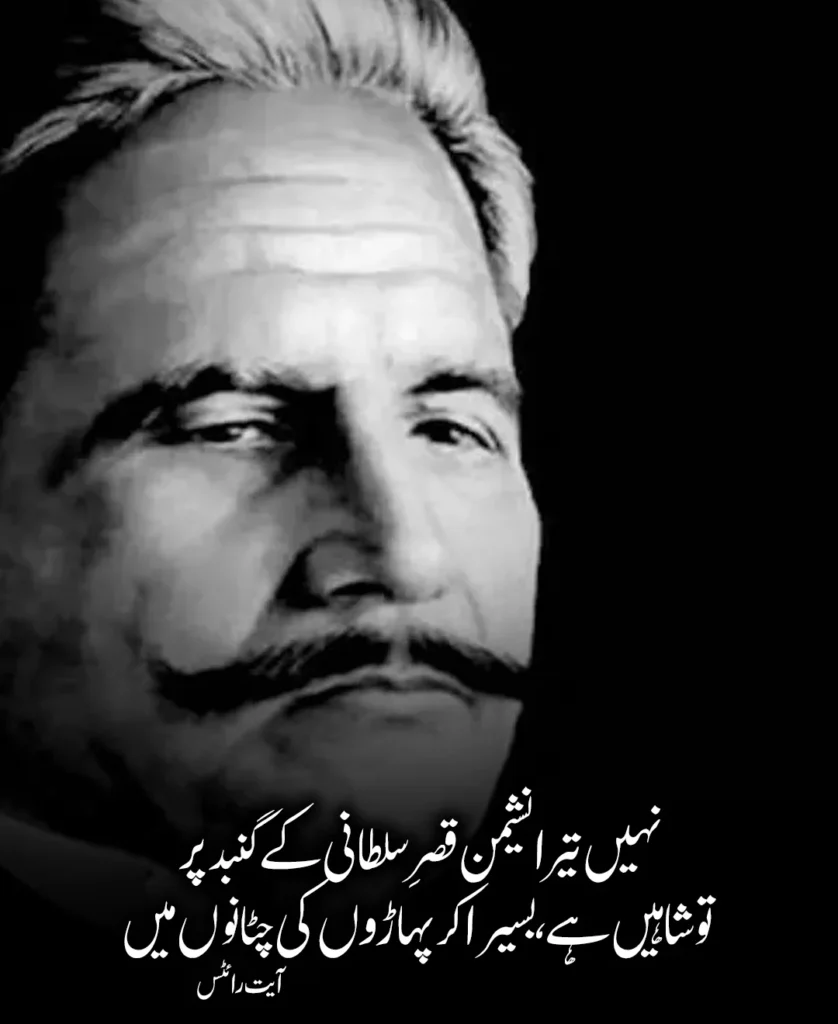
نہیں تیرا نشیمن قصرِ سلطانی کے گنبد پر
تو شاہیں ہے، بسیرا کر پہاڑوں کی چٹانوں میں
Nahin tera nasheman qasr-e-sultani ke gumbad par,
Tu shaheen hai, basera kar paharon ki chatanon mein.
This Allama Iqbal shair teaches independence and simplicity. Iqbal advises the youth not to become dependent on luxury or powerful people. Like an eagle, they should choose freedom, dignity, and a challenging life over comfort and dependence.
5. Hazaron Saal Nargis Apni Be-Noori Pe Roti Hai
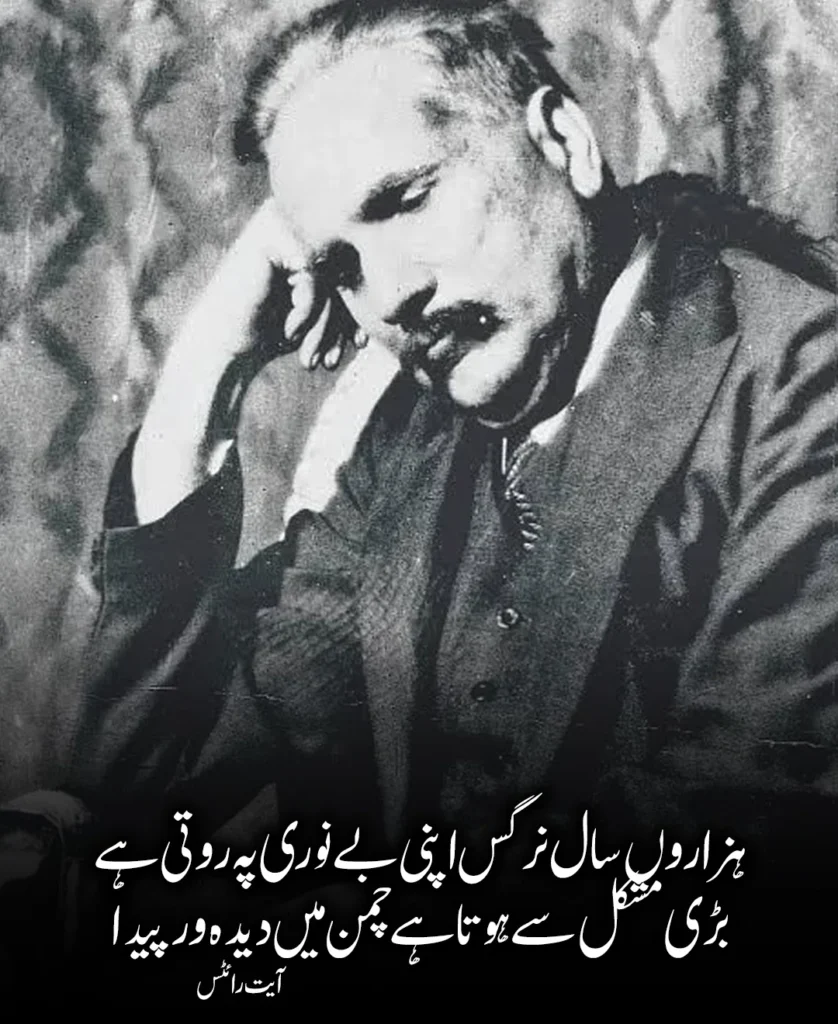
ہزاروں سال نرگس اپنی بے نوری پہ روتی ہے
بڑی مشکل سے ہوتا ہے چمن میں دیدہ ور پیدا
Hazaron saal nargis apni be-noori pe roti hai,
Bari mushkil se hota hai chaman mein deedawar paida.
This famous Urdu poetry explains that truly visionary and wise individuals are rarely born. Society may wait for generations before a great leader, thinker, or reformer appears and guides people toward a better future.
6. Amal Se Zindagi Banti Hai
عمل سے زندگی بنتی ہے جنت بھی، جہنم بھی
یہ خاکی اپنی فطرت میں نہ نوری ہے نہ ناری ہے
Amal se zindagi banti hai jannat bhi, jahannum bhi,
Yeh khaki apni fitrat mein na noori hai na naari hai.
Iqbal emphasizes the importance of actions. Human beings are not born completely good or bad; their decisions and deeds shape their lives. Positive actions can create a peaceful life, while harmful choices can produce suffering.
7. Yaqeen Muhkam, Amal Paiham
یقیں محکم، عمل پیہم، محبت فاتحِ عالم
جہادِ زندگانی میں ہیں یہ مردوں کی شمشیریں
Yaqeen muhkam, amal paiham, mohabbat fateh-e-alam,
Jihad-e-zindagani mein hain yeh mardon ki shamsheeren.
According to Iqbal, firm faith, continuous effort, and sincere love are the strongest weapons in life’s struggle. The verse inspires readers to remain confident, work consistently, and treat others with compassion.
8. Dil Se Jo Baat Nikalti Hai
دل سے جو بات نکلتی ہے اثر رکھتی ہے
پر نہیں، طاقتِ پرواز مگر رکھتی ہے
Dil se jo baat nikalti hai asar rakhti hai,
Par nahin, taqat-e-parwaz magar rakhti hai.
Words spoken sincerely from the heart can deeply influence others. Although words do not have physical wings, their truth and emotional power allow them to travel far and leave a lasting impression.
9. Nigah Buland, Sukhan Dilnawaz
نگاہ بلند، سخن دلنواز، جاں پرسوز
یہی ہے رختِ سفر میرِ کارواں کے لیے
Nigah buland, sukhan dilnawaz, jaan pursوز,
Yehi hai rakht-e-safar meer-e-karwan ke liye.
Meaning
This verse describes the essential qualities of a successful leader. A leader should possess a great vision, speak kindly, and carry sincere passion in the heart. These qualities help a person guide and inspire others.
10. Jis Khet Se Dehqan Ko Mayassar Nahin Rozi
جس کھیت سے دہقاں کو میسر نہیں روزی
اُس کھیت کے ہر خوشۂ گندم کو جلا دو
Jis khet se dehqan ko mayassar nahin rozi,
Us khet ke har khosha-e-gandum ko jala do.
Iqbal strongly criticizes economic injustice in this revolutionary verse. He argues that a system has no moral value if the people who work hard cannot receive the basic rewards of their labour. The poetry expresses support for fairness and workers’ rights.